
Shenzhen Zhenghao Plastic & Mold Co.,Ltd
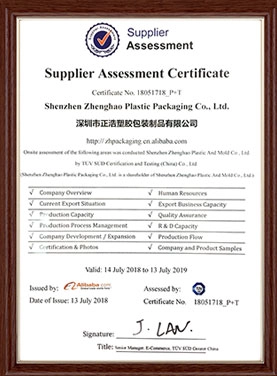
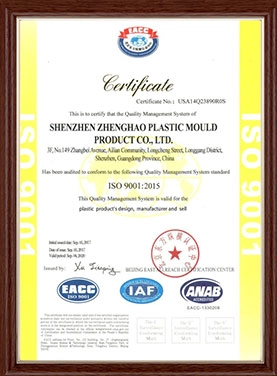
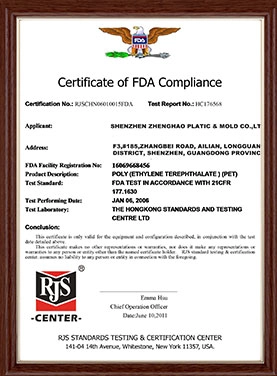
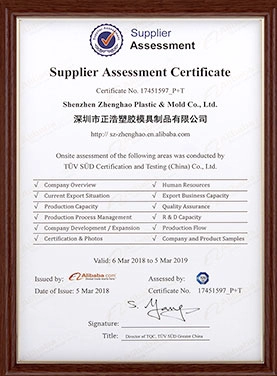

Tem No: zh-mb004 Capacity: 250ml 350ml 400ml 500ml 1000ml Material: PET Shape: round Used for: shampoo packaging Place of origin: Shenzhen, China MOQ: 5,000 pieces Unit price range: $0.3-0.6 Sample: available, free, client pay for sample shipping cost

Tem No: ZH-C70244 Capacity: 1L Material: 500ml 2L 4L Used for: detergent liquid bottle Place of origin: Shenzhen, China MOQ: 5,000 pieces Unit price range: $0.32-$0.48 Sample: available, free, client pay for sample shipping cost

Tem No: zh-p9309 Capacity: 2L Material: HDPE Shape: Round Used for: detergant liquid Place of origin: Shenzhen, China MOQ: 5,000 pieces Unit price range: $0.32-$0.48 Sample: available, free, client pay for sample shipping cost

Tem No: zh-c70231 Capacity: 1L Material: HDPE Shape: Round Used for: detergant liquid Place of origin: Shenzhen, China MOQ: 5,000 pieces Unit price range: $0.32-$0.48 Sample: available, free, client pay for sample shipping cost

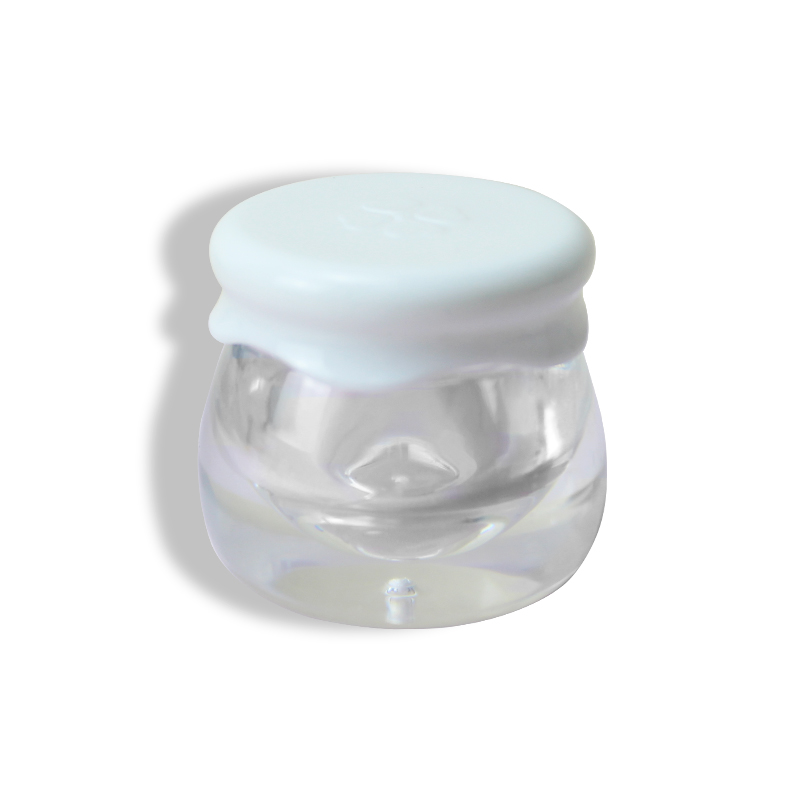
PP (Polypropylene) plastic containers are increasingly popular in the cosmetic and skincare industries, particularly for small-capacity products like creams, eye creams, and eyeliner gels.

plastic drink bottles factory, China cosmetic plastic bottles, disposable plastic bottle suppliers, plastic pet bottles manufactures, plastic bottles for lotion manufactures

customized color plastic bottle with pump 300ml 400ml 500ml round pet bottle for skincare plastic lotion bottle


HDPE Custom Eco PCR Recycled Plastic Bottle Body Tanning Oil 60ml Travel Size Squeeze Bottle Cosmetics


New female urine bottle. Equipped with a patented leak-proof cover to block urine leakage and avoid embarrassment. Currently, men's urine bottles are ...

These large empty pump bottles are ideal when you don’t want ugly or messy detergent bottles laying around. They are great for business use / work si...

Zhenghao Plastic & Mold Co.,Ltd had developed a new materia named HDPE sand blasting matieral, that is double layer bottle construction. The final bo...
What "BPA-Free" Actually Signifies for Plastic Sauce Bottles ?
For sourcing managers and packaging developers, "BPA-Free" has become a non-negotiable label on plastic sauce bottles—but what does it actually guarantee? With condiments ranging from acidic hot sauces to fatty BBQ sauces, the stakes go beyond marketing claims: non-compliant packaging risks FDA detention, costly recalls, and compromised product safety. This guide cuts through the jargon to explain BPA-Free’s practical implications for plastic sauce bottle selection, compliance, and real-world performance, while diving deeper into material science and advanced sourcing strategies that separate industry leaders from generic suppliers.
Contrary to common misconception, "BPA-Free" does not automatically equal "food-safe"—it simply means the plastic lacks bisphenol A (BPA), an endocrine-disrupting chemical once used in polycarbonate plastics and epoxy coatings. For plastic sauce bottles, this label requires using alternative resins like HDPE, PET, or LDPE—materials naturally free of BPA and approved under FDA 21 CFR Part 177. However, the depth of compliance extends far beyond resin type: FDA’s latest 2023 update to 21 CFR Part 177.1520 now mandates cumulative migration testing (not just BPA-specific) for all food-contact plastics, requiring total extractables to stay below 50 mg/dm² for aqueous and fatty foods.
The critical distinction lies in migration limits: FDA mandates BPA migration must not exceed 0.6 mg/kg, while ISO 76618 specifies rigorous testing protocols—including 10-day exposure to simulants (3% acetic acid for acidic sauces, 95% ethanol for fatty sauces) at 40°C—to verify compliance. For B2B buyers, this means a "BPA-Free" claim without supporting FDA/ISO documentation is worthless. A 2022 study by the Packaging Technology Forum found that 12% of "BPA-Free" plastic sauce bottles tested failed cumulative migration limits due to low-quality recycled content or improper resin blending, highlighting the need for granular supplier validation.
Why BPA-Free Matters for Sauce Packaging Specifically ?
Sauces present unique challenges for plastic packaging that amplify BPA-related risks. Acidic condiments like hot sauce (pH ≤ 4.5) or tomato-based BBQ sauces increase BPA migration risk by 30-50% compared to neutral foods, according to Canadian government research (Health Canada, 2021). Similarly, hot-filled sauces (e.g., heated BBQ sauce filled at 85-90°C) can push migration levels past safety thresholds by 2-3x if using resins with low heat deflection temperatures (HDT < 100°C). Even ambient-stored sauces with high sugar content (e.g., honey BBQ sauce) accelerate plastic degradation, as sugars act as plasticizers that break down polymer chains over time.
For wholesale buyers, these risks translate to tangible financial and reputational damage. In 2023, a U.S.-based condiment brand faced a $375,000 FDA fine and 6-month production halt after 16 oz plastic BBQ sauce bottles failed migration tests—traceable to a supplier using uncertified recycled HDPE. BPA-Free plastic sauce bottles mitigate these risks, but only when paired with resins engineered for sauce-specific conditions: for example, HDPE with a melt flow rate (MFR) of 0.9-2.1 g/10min (ASTM D1238) offers optimal chemical resistance for fatty sauces, while PET with a crystallinity level of 30-40% enhances barrier properties against acidic hot sauces.
Advanced Material Engineering for BPA-Free Plastic Sauce Bottles
Beyond basic resin selection, leading plastic bottle manufacturers now offer custom-engineered BPA-Free blends to address niche sauce packaging challenges. For example:
Barrier-Modified HDPE: Infused with ethylene vinyl alcohol (EVOH) layers, this blend reduces oxygen permeability by 80% compared to standard HDPE—critical for preserving the flavor of oxygen-sensitive sauces like hot sauce or fermented condiments. A 2024 industry study found EVOH-modified HDPE extends shelf life by 6-9 months versus unmodified resins.
Heat-Resistant PET: Formulated with cyclohexanedimethanol (CHDM) copolymers, this resin withstands hot-fill temperatures up to 95°C without warping—ideal for wholesale 12 oz plastic sauce bottles used for ready-to-eat heated BBQ sauces. It also meets EU REACH regulation 1907/2006, a key requirement for cross-border sales.
Soft-Touch LDPE: Blended with metallocene catalysts, this material offers 30% better squeezability than standard LDPE, making it perfect for plastic squeeze bottles for sauces with high viscosity (e.g., aioli, thick BBQ sauce). It also reduces cap torque by 25%, improving user experience while maintaining leak-proof performance.
These advanced materials come with specific certification requirements: look for suppliers who provide ISO 10993-17 biocompatibility testing (for migration in fatty foods) and ASTM F1308 oxygen transmission rate (OTR) reports—critical metrics for sauce shelf life.
These advanced materials come with specific certification requirements: look for suppliers who provide ISO 10993-17 biocompatibility testing (for migration in fatty foods) and ASTM F1308 oxygen transmission rate (OTR) reports—critical metrics for sauce shelf life.
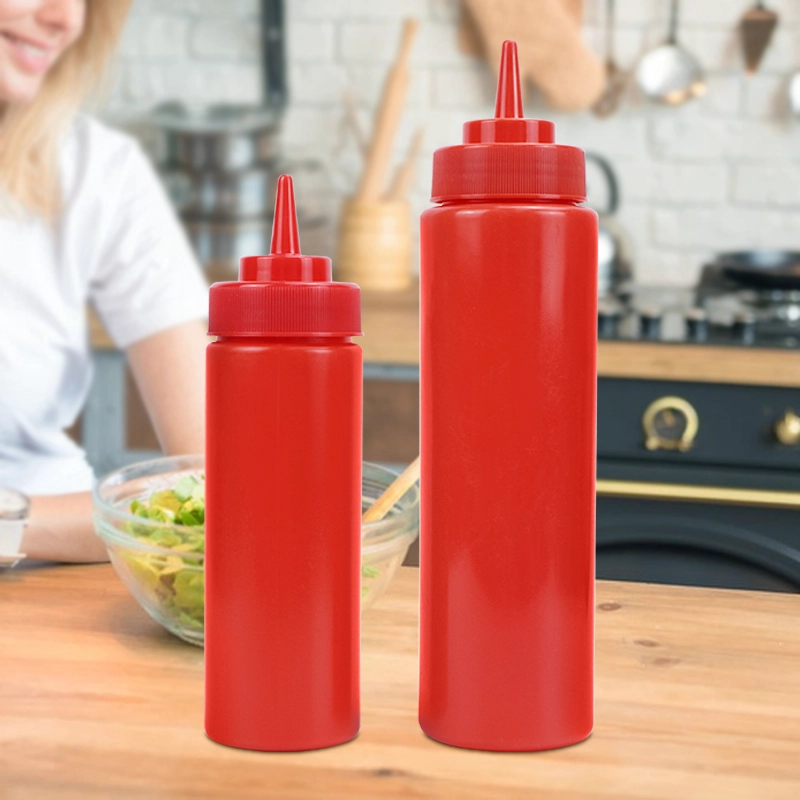
Key Considerations When Choosing Plastic Sauce Bottle
Below is a practical, easy-to-follow checklist for B2B buyers selecting plastic sauce bottles, no complex technical parameters required:
Confirm the supplier provides official food-grade and BPA-Free material certification, not just printed labels on products.
Match bottle material to your sauce type: acidic hot sauce, oily BBQ sauce, and thick squeeze condiments each need different resins.
Select suitable capacity: 12 oz plastic sauce bottles for retail shelf sales, 16 oz plastic sauce bottles for catering, restaurants and bulk wholesale
Check structural design: leak-proof cap sealing, squeeze flexibility, and stackable shape for logistics and storage
For plastic bbq sauce bottles wholesale, verify the factory supports custom molding, private labeling and stable mass production capacity
Prioritize manufacturers with strict raw material screening and production hygiene standards, avoiding mixed recycled materials of unknown origin.
How to Verify BPA-Free Claims When Sourcing Wholesale?
For B2B buyers sourcing large batches of plastic sauce bottles, never trust only product labeling.
Reliable suppliers will provide complete material qualification documents and third-party food contact test reports. Avoid suppliers who cannot trace raw resin sources or only offer vague certification files. When purchasing plastic bbq sauce bottles wholesale, it is wise to request sample testing first: store your own sauce in sample bottles for a period of time to observe flavor change, plastic deformation and leakage, before placing bulk orders.
Working with a professional custom plastic bottle factory also means you can adjust bottle shape, wall texture, cap structure and printing design according to your brand needs, while keeping all materials consistently BPA-Free and food-grade compliant.
FAQ
1. What material is best for plastic hot sauce bottles?
PET and HDPE are the two most suitable options. PET offers clear visibility for retail display, while HDPE provides stronger corrosion resistance for long-term storage of acidic hot sauces.
2. Are 16 oz plastic sauce bottles safe for repeated use?
It depends on the material. HDPE-made bottles are suitable for repeated cleaning and use, while regular PET bottles are better for single-use retail packaging and not recommended for long-term reuse.
3. Is BPA-Free the same as food-grade plastic?
No. BPA-Free only means no BPA content; food-grade requires comprehensive safety compliance, production hygiene control, and resistance to chemical migration when contacting acidic and oily sauces.
4. What should I check first when buying plastic bbq sauce bottles wholesale?
Prioritize material certification, sauce compatibility, sealing performance, and the factory’s custom production capability, rather than only focusing on unit price.

 français
  Deutsche
  русский
  Español
  Italian
  português
  Nederlands
  Ελληνικά
  简体中文
简体中文  Polskie
  Czech
Czech