
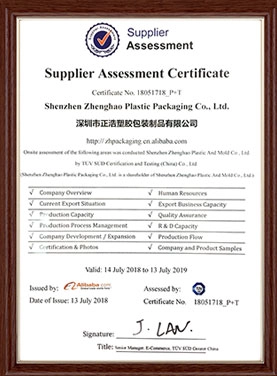
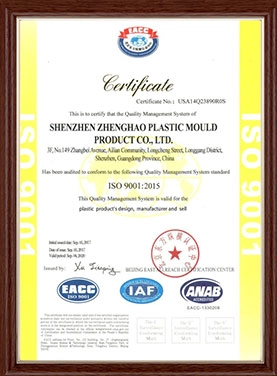
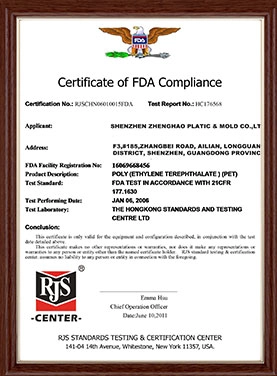
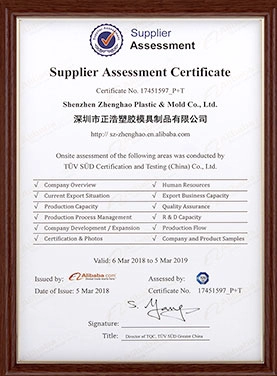
Shenzhen Zhenghao Plastic & Mold Co.,Ltd

Tem No: zh-mb004 Capacity: 250ml 350ml 400ml 500ml 1000ml Material: PET Shape: round Used for: shampoo packaging Place of origin: Shenzhen, China MOQ: 5,000 pieces Unit price range: $0.3-0.6 Sample: available, free, client pay for sample shipping cost

Tem No: ZH-C70244 Capacity: 1L Material: 500ml 2L 4L Used for: detergent liquid bottle Place of origin: Shenzhen, China MOQ: 5,000 pieces Unit price range: $0.32-$0.48 Sample: available, free, client pay for sample shipping cost

Tem No: zh-p9309 Capacity: 2L Material: HDPE Shape: Round Used for: detergant liquid Place of origin: Shenzhen, China MOQ: 5,000 pieces Unit price range: $0.32-$0.48 Sample: available, free, client pay for sample shipping cost

Tem No: zh-c70231 Capacity: 1L Material: HDPE Shape: Round Used for: detergant liquid Place of origin: Shenzhen, China MOQ: 5,000 pieces Unit price range: $0.32-$0.48 Sample: available, free, client pay for sample shipping cost

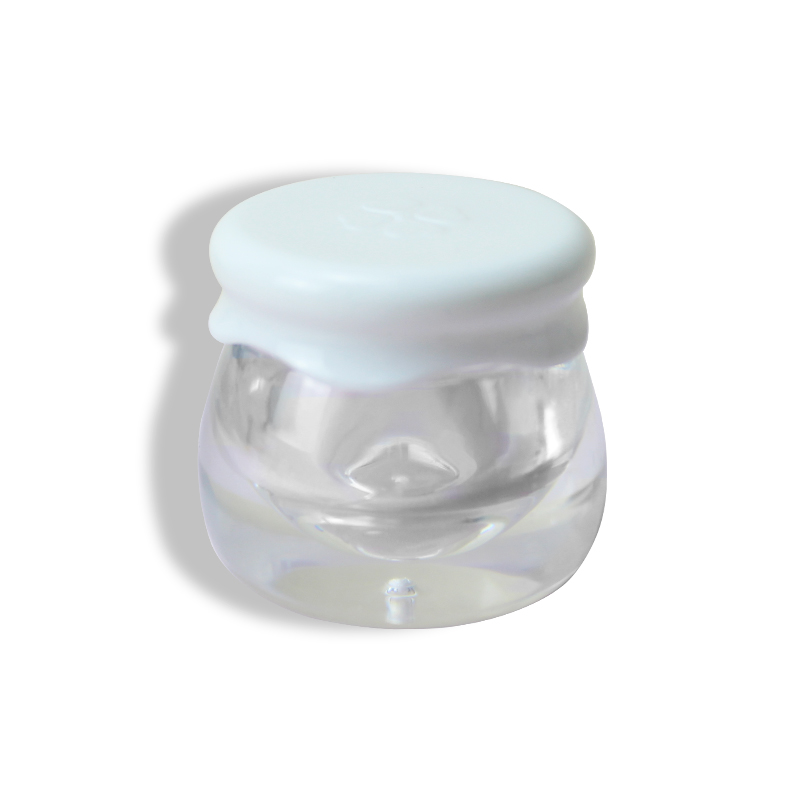
PP (Polypropylene) plastic containers are increasingly popular in the cosmetic and skincare industries, particularly for small-capacity products like creams, eye creams, and eyeliner gels.

plastic drink bottles factory, China cosmetic plastic bottles, disposable plastic bottle suppliers, plastic pet bottles manufactures, plastic bottles for lotion manufactures

customized color plastic bottle with pump 300ml 400ml 500ml round pet bottle for skincare plastic lotion bottle


HDPE Custom Eco PCR Recycled Plastic Bottle Body Tanning Oil 60ml Travel Size Squeeze Bottle Cosmetics


New female urine bottle. Equipped with a patented leak-proof cover to block urine leakage and avoid embarrassment. Currently, men's urine bottles are ...

These large empty pump bottles are ideal when you don’t want ugly or messy detergent bottles laying around. They are great for business use / work si...

Zhenghao Plastic & Mold Co.,Ltd had developed a new materia named HDPE sand blasting matieral, that is double layer bottle construction. The final bo...
A syrup bottle may look like a simple piece of food packaging, but the moment the product inside becomes thick, sticky, or difficult to flow, packaging design becomes much more complicated. Brown sugar syrup, honey, chocolate sauce, fruit puree, jam, and other concentrated toppings do not behave like water or other low-viscosity liquids. They need more force to move, take longer to flow, and can easily leave residue around the dispensing outlet.
This is why a Pump Syrup Bottle designed for high-viscosity products needs to do more than simply store the product. It should provide a practical balance between dispensing speed, dosage control, anti-drip performance, bottle stability, and ease of repeated use.
For beverage suppliers, cafés, bubble tea shops, dessert stores, restaurants, bakeries, and commercial kitchens, these details can directly affect daily operations. The right pump system can make a thick syrup easier to dispense while reducing mess and unnecessary product waste.
The main challenge with thick syrup is resistance to flow. A thin liquid can move through a relatively narrow passage with little effort, while honey, chocolate sauce, fruit puree, and concentrated brown sugar syrup require considerably more pressure to move through the same pathway.
This means a pump designed for ordinary liquid products may not provide the expected performance when used with a viscous formula. The user may need to press the pump repeatedly, apply excessive force, or wait for the product to reach the outlet. In commercial environments, where the dispenser may be operated dozens or even hundreds of times a day, these small inconveniences quickly become significant.
A suitable syrup pump bottle therefore needs to be developed around the actual characteristics of the product. The pump chamber, dip tube, outlet opening, stroke, and internal flow path all influence how efficiently the syrup moves through the system. The goal is not simply to make the outlet larger, but to create a dispensing structure that matches the viscosity and intended dosage of the formula.
One of the reasons pump packaging works well for commercial food service is its ability to release a relatively large amount of product with each press. When preparing beverages or desserts during a busy service period, users do not want to spend several seconds repeatedly pumping a thick syrup.
However, high output needs to be balanced with portion control. If too much syrup is released with every press, the package can contribute to excessive product consumption and inconsistent recipes. For businesses that rely on standardized drinks or desserts, this can affect both product quality and operating costs.
The ideal Pump Syrup Bottle should therefore provide a controlled high dosage rather than simply maximizing output. The pump stroke, chamber capacity, and outlet structure can be adjusted according to the product and application. A syrup intended for large-volume commercial use may require a different output from a premium dessert sauce used in smaller portions.
This is an important point for brands developing custom packaging: the pump should be tested with the actual formula before the final structure is approved. A pump that performs well with a relatively thin syrup may behave very differently when filled with honey or chocolate sauce.
For high-viscosity products, dispensing does not end when the user releases the pump. Residual product around the outlet can continue to move downward, creating drips, strings, or sticky buildup on the bottle and countertop.
This is particularly noticeable with honey, chocolate sauce, fruit puree, and thick dessert syrups. A small amount of residue may seem insignificant during one use, but after repeated operation throughout the day, the pump can become increasingly messy. This creates an unpleasant user experience and can also make the surrounding work area harder to maintain.
Effective anti-drip performance is therefore a combination of pump recovery and outlet design rather than simply adding a special nozzle. The viscosity of the formula, outlet diameter, internal pressure, dispensing speed, and the way the pump returns after each press all need to work together.
For a custom syrup dispenser bottle, this is one of the areas where testing is particularly valuable. Instead of evaluating the pump with water or another low-viscosity liquid, manufacturers should test it using the actual syrup whenever possible. This gives a much more realistic indication of flow, residue, and dispensing behavior.
The pump is only one part of the dispensing system. The bottle itself needs to remain stable when the user applies downward pressure repeatedly.
The tall cylindrical structure commonly used for commercial syrup packaging provides a practical combination of capacity and footprint. A relatively narrow body is easy to position on a preparation counter, while a sufficiently wide base helps reduce the risk of tipping during repeated pumping. The bottle height can also be coordinated with the length of the pump stem so that the dispensing system remains functional as the product level decreases.
For cafés, tea shops, restaurants, and dessert businesses, this stability is more important than it may appear. A package used occasionally at home has very different requirements from one that is operated continuously during a busy service period.
A commercial syrup bottle should therefore be designed around its actual working environment. Capacity, bottle diameter, wall thickness, base geometry, pump length, and closure structure can all be considered together during customization.
Plastic is well suited to this type of packaging because it provides manufacturers with considerable freedom in bottle shape, weight, capacity, color, and structure. Depending on the formula and packaging requirements, materials such as PET, HDPE, and PP can be considered for different parts of the system.
PET can provide a clean and modern appearance, particularly when brands want the color of the syrup to remain visible. HDPE offers a more opaque appearance and strong durability, making it useful for applications where impact resistance and a solid package feel are priorities. PP is commonly used for closures and pump components because of its durability and chemical resistance.
Material selection should still be based on the actual product rather than appearance alone. A food supplier developing a thick chocolate sauce, for example, should evaluate how the formula interacts with the bottle and dispensing system during storage and repeated use.
This is why a professional Pump Syrup Bottle manufacturer should be involved early in the development process. Packaging performance is easier to optimize when the manufacturer understands the formula, filling process, expected dosage, and final application before the mold is completed.
For beverage and food suppliers, customization is often associated with bottle color and logo printing. These elements are important for brand recognition, but functional customization can create much more value.
A Custom Pump Syrup Bottle can be developed with a specific capacity, bottle diameter, pump output, neck structure, and dispensing configuration. The bottle and pump can also be matched in color to create a consistent visual identity across a product range.
For example, a bubble tea syrup supplier may use one bottle structure for several flavors while changing the bottle or pump color to distinguish brown sugar, fruit, and specialty syrups. A dessert sauce brand may prefer a more premium transparent bottle that allows the color and texture of the product to become part of the presentation.
Surface treatments and decoration can further differentiate the package. Zhenghao can support Pantone color matching, screen printing, UV printing, labeling, matte finishes, frosted effects, and other decoration options according to the requirements of the project.
A custom packaging project works best when the manufacturer is involved before the final bottle shape is decided. At Zhenghao, the development process can begin with a simple drawing, reference image, or basic product requirement. The design can then be developed through structural design, 3D visualization, mold making, sampling, and final production.
For a high-viscosity food product, we recommend confirming several practical details during the sample stage: the viscosity of the formula, expected output per pump, required dispensing speed, anti-drip performance, bottle stability, and how easily the remaining product can be accessed.
This approach is especially useful for suppliers purchasing bulk syrup bottles, because a small design problem can become expensive when multiplied across a large production run. Testing the actual product before mass production can help identify issues with pump force, output, leakage, or residue before the packaging enters large-scale production.
Founded in 2007, Zhenghao is a custom plastic packaging manufacturer and supplier with capabilities covering product design, mold development, blow molding, injection molding, printing, sampling, mass production, and shipping. The company works with customers across food, cosmetics, personal care, medicine, household products, and other industries.
The best dispensing bottle is not necessarily the one with the most complicated pump or the largest output. It is the one that matches the characteristics of the product and the way customers actually use it.
For honey and thick syrups, smooth dispensing and anti-drip performance may be the priority. For chocolate sauce and fruit puree, the internal flow path and outlet design may require additional attention. For busy cafés and beverage stores, high dosage, easy operation, and bottle stability can make the greatest difference.
A well-developed Pump Syrup Bottle brings these factors together. It allows high-viscosity products to be dispensed efficiently, helps users maintain more consistent portions, and reduces the mess associated with sticky food ingredients.
For brands and food-service suppliers, customized packaging can therefore become more than a container. When the bottle structure, pump performance, material, and visual identity are developed as one system, the packaging can improve both the daily user experience and the way the brand is perceived in the market.

 français
  Deutsche
  русский
  Español
  Italian
  português
  Nederlands
  Ελληνικά
  简体中文
简体中文  Polskie
  Czech
Czech