
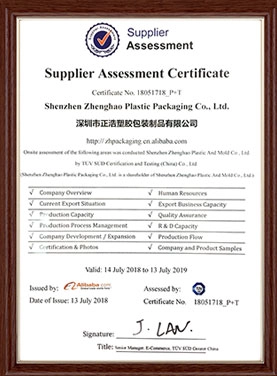
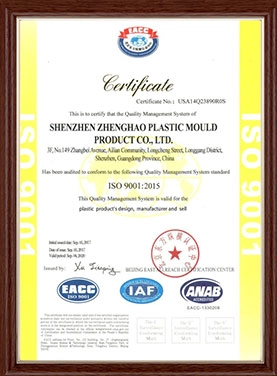
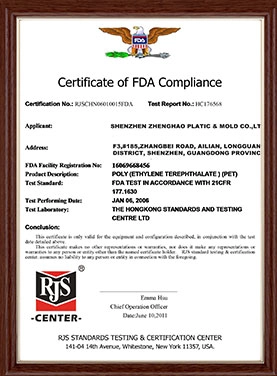
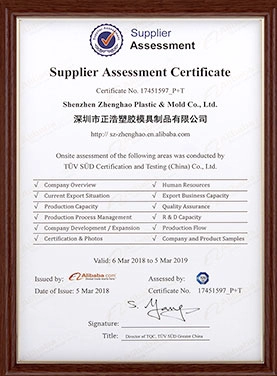
Shenzhen Zhenghao Plastic & Mold Co.,Ltd

Tem No: zh-mb004 Capacity: 250ml 350ml 400ml 500ml 1000ml Material: PET Shape: round Used for: shampoo packaging Place of origin: Shenzhen, China MOQ: 5,000 pieces Unit price range: $0.3-0.6 Sample: available, free, client pay for sample shipping cost

Tem No: ZH-C70244 Capacity: 1L Material: 500ml 2L 4L Used for: detergent liquid bottle Place of origin: Shenzhen, China MOQ: 5,000 pieces Unit price range: $0.32-$0.48 Sample: available, free, client pay for sample shipping cost

Tem No: zh-p9309 Capacity: 2L Material: HDPE Shape: Round Used for: detergant liquid Place of origin: Shenzhen, China MOQ: 5,000 pieces Unit price range: $0.32-$0.48 Sample: available, free, client pay for sample shipping cost

Tem No: zh-c70231 Capacity: 1L Material: HDPE Shape: Round Used for: detergant liquid Place of origin: Shenzhen, China MOQ: 5,000 pieces Unit price range: $0.32-$0.48 Sample: available, free, client pay for sample shipping cost

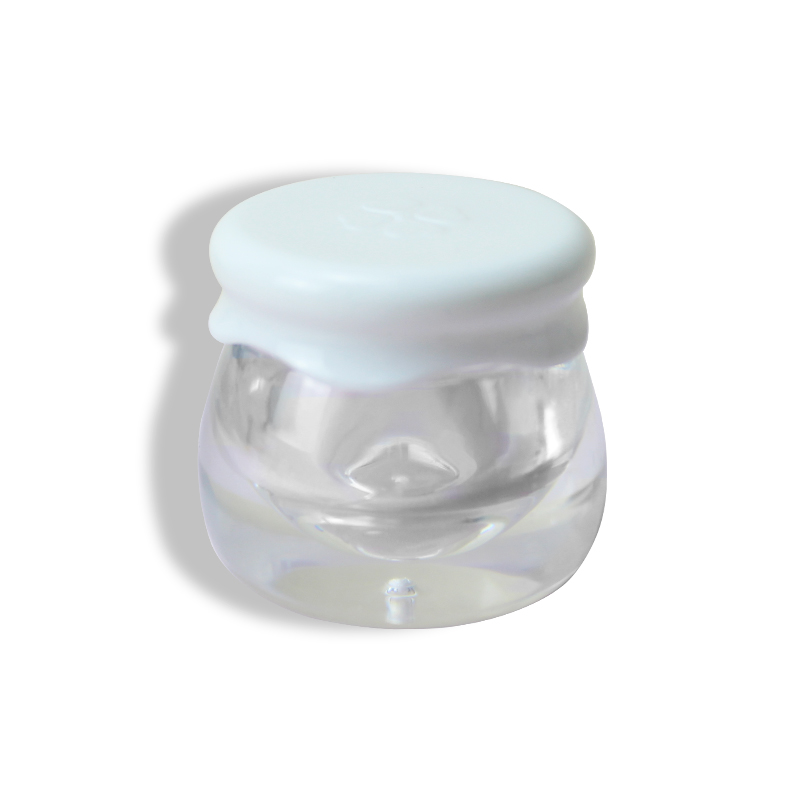
PP (Polypropylene) plastic containers are increasingly popular in the cosmetic and skincare industries, particularly for small-capacity products like creams, eye creams, and eyeliner gels.

plastic drink bottles factory, China cosmetic plastic bottles, disposable plastic bottle suppliers, plastic pet bottles manufactures, plastic bottles for lotion manufactures

customized color plastic bottle with pump 300ml 400ml 500ml round pet bottle for skincare plastic lotion bottle


HDPE Custom Eco PCR Recycled Plastic Bottle Body Tanning Oil 60ml Travel Size Squeeze Bottle Cosmetics


New female urine bottle. Equipped with a patented leak-proof cover to block urine leakage and avoid embarrassment. Currently, men's urine bottles are ...

These large empty pump bottles are ideal when you don’t want ugly or messy detergent bottles laying around. They are great for business use / work si...

Zhenghao Plastic & Mold Co.,Ltd had developed a new materia named HDPE sand blasting matieral, that is double layer bottle construction. The final bo...
If you have ever pumped a thick fruit puree or a dense syrup and heard that annoying "squeak" followed by a dribbling, messy stream, you know exactly what I am talking about. That moment when the liquid refuses to come out smoothly, or worse, when the entire bottle seems to collapse inward while the pump head spits out air—it is frustrating for the end-user, but it is a nightmare for the brand owner.
A lot of brands treat the Pump Syrup Bottle as an afterthought, something they buy off the shelf to match their label. But having spent years on the production floor of a custom packaging factory, I can tell you this: the engineering behind a viscous liquid pump is far more intricate than most people realize. The real challenge isn’t just making the bottle look good; it is making the mechanics work perfectly with the viscosity of the specific liquid inside. Here is the deep dive into the engineering and customization that actually matters.
Let’s talk about the physics inside your bottle. Standard dispensing pumps are generally designed for watery, low-viscosity liquids like shampoo or hand soap. When you try to use those same components for a high-viscosity fruit puree, the piston fails to create a proper vacuum seal during the upstroke. This leads to an airlock—a pocket of air trapped between the dip tube and the piston chamber.
This airlock is the primary reason your sauce "spits" or pulls back into the tube, leaving a sticky residue on the bottle neck that eventually attracts dust or mold. For a serious manufacturer and supplier of Pump Syrup Bottle solutions, the core engineering focus isn't on the external nozzle shape, but on the internal "check valve" and the spring tension rating. Thick liquids create tremendous backpressure. If the spring is too weak, the piston won't retract fully, reducing the suction power; if the spring is too strong, the user has to press too hard, which strains the neck thread and causes the whole pump head to wobble. A high-quality custom solution balances that spring rate precisely against the viscosity of the client's actual syrup.
This is where the conversation needs to shift from "What do you have in stock?" to "What do you need to solve your problem?" As a specialized plastic container supplier, we don't just sell off-the-shelf pumps. We custom-engineer the dip tube geometry. Most standard pumps have a straight dip tube that sits flat at the bottom of the bottle. But for high-viscosity products, this design is fatal. The syrup simply won't flow into the tiny opening, leading to a "dead zone" where 15% of your expensive product is trapped at the bottom, wasted.
In our custom factory process, we often modify the dip tube with a specific beveled cut or utilize a ballasted tip (a small weighted ball at the end of the tube) that ensures the tube stays anchored in the absolute deepest corner of the bottle, no matter how the user tilts it. We also pay close attention to the "neck finish" – the threading at the top of the bottle. A tight, deep-thread engagement is not just about preventing leaks; it is about maintaining the structural integrity of the bottle during the pumping action. A weak thread can actually strip when a person aggressively pumps a thick fruit puree, which is a catastrophic failure for a food-grade product that relies on an airtight seal for shelf life.
Take it from us—when a client comes to us with a sauce recipe, the first thing we ask for is a viscosity reading (usually in centipoise, or cP) and the temperature at which they intend to fill the bottle. Why? Because heat is a huge factor. Thick syrups are often filled hot (around 80-90°C) to make them easier to pour. But if the pump's piston seal is made from standard LDPE plastic, the heat will soften the seal, causing it to warp as it cools. The result? A pump that seals perfectly on Day 1, but leaks like a sieve a week later after the material relaxes.
That is why a reliable manufacturer doesn't just pick a standard mould. They will offer you specific material upgrades—like food-grade polypropylene (PP) for the piston and silicone-free or medical-grade silicone rings for the inner gasket. These materials maintain their elasticity across a wide temperature range, ensuring that whether your product is stored in a sunny kitchen or a refrigerated shelf, the pumping action remains consistently smooth. This level of customization costs a bit more initially, but it saves your brand from expensive returns, customer complaints, and product wastage in the long run.
Many brands make the mistake of sourcing their Pump Syrup Bottle from separate suppliers: one who makes the bottle body, and another who supplies the pump head. As a fully integrated factory, we warn against this fragmentation. When the bottle and the pump come from two different sources, the thread diameter, pitch, and gasket thickness often have minor tolerances that add up to a big disaster. The pump may screw on tightly, but the slight micro-gaps can cause the syrup to oxidize and degrade over time, ruining its color and flavor.
When you work directly with a custom packaging supplier who handles both the molding and the assembly, you gain control over the "torque" of the seal. We run real-life pressure and tilt tests on our production lines. We simulate the worst-case shipping scenario—a package turning upside down in a hot truck—just to see if our specialized anti-drip valve holds. If it fails, we tweak the valve's silicone membrane thickness before a single unit goes to mass production. It is a granular, iterative process that you simply cannot get from a catalog order.
At the end of the day, a fruit puree or a savory sauce isn't just a liquid; it is an engineered product that requires engineered packaging. A poorly designed dispenser can ruin the entire sensory experience of your food product. If you are about to launch a new premium sauce line, do not look for the cheapest generic Pump Syrup Bottle you can find. Look for a manufacturer who is willing to ask you about the specific gravity of your product, the resting angle of your dispensing, and the climate conditions of your final destination.
Yes, working with a custom factory involves a longer lead time and a minimum order quantity. But the payoff is a dispenser that works beautifully every single time—delivering a smooth, drip-free stream that elevates your product from a mere ingredient to a premium culinary tool. That is the engineering difference that your customers will feel with every single pump.

 français
  Deutsche
  русский
  Español
  Italian
  português
  Nederlands
  Ελληνικά
  简体中文
简体中文  Polskie
  Czech
Czech