
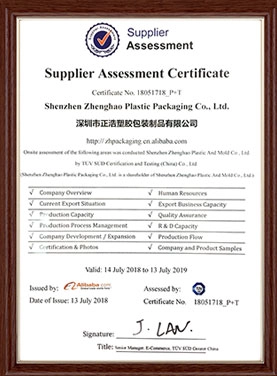
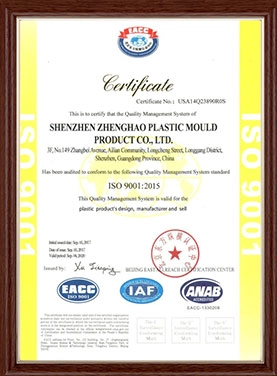
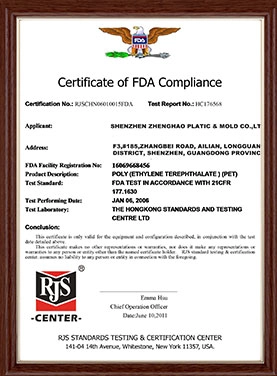
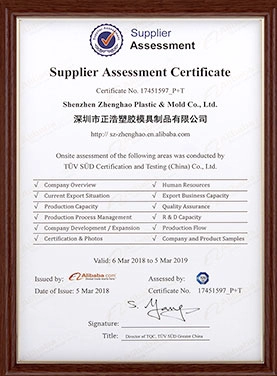
Shenzhen Zhenghao Plastic & Mold Co.,Ltd

Tem No: zh-mb004 Capacity: 250ml 350ml 400ml 500ml 1000ml Material: PET Shape: round Used for: shampoo packaging Place of origin: Shenzhen, China MOQ: 5,000 pieces Unit price range: $0.3-0.6 Sample: available, free, client pay for sample shipping cost

Tem No: ZH-C70244 Capacity: 1L Material: 500ml 2L 4L Used for: detergent liquid bottle Place of origin: Shenzhen, China MOQ: 5,000 pieces Unit price range: $0.32-$0.48 Sample: available, free, client pay for sample shipping cost

Tem No: zh-p9309 Capacity: 2L Material: HDPE Shape: Round Used for: detergant liquid Place of origin: Shenzhen, China MOQ: 5,000 pieces Unit price range: $0.32-$0.48 Sample: available, free, client pay for sample shipping cost

Tem No: zh-c70231 Capacity: 1L Material: HDPE Shape: Round Used for: detergant liquid Place of origin: Shenzhen, China MOQ: 5,000 pieces Unit price range: $0.32-$0.48 Sample: available, free, client pay for sample shipping cost

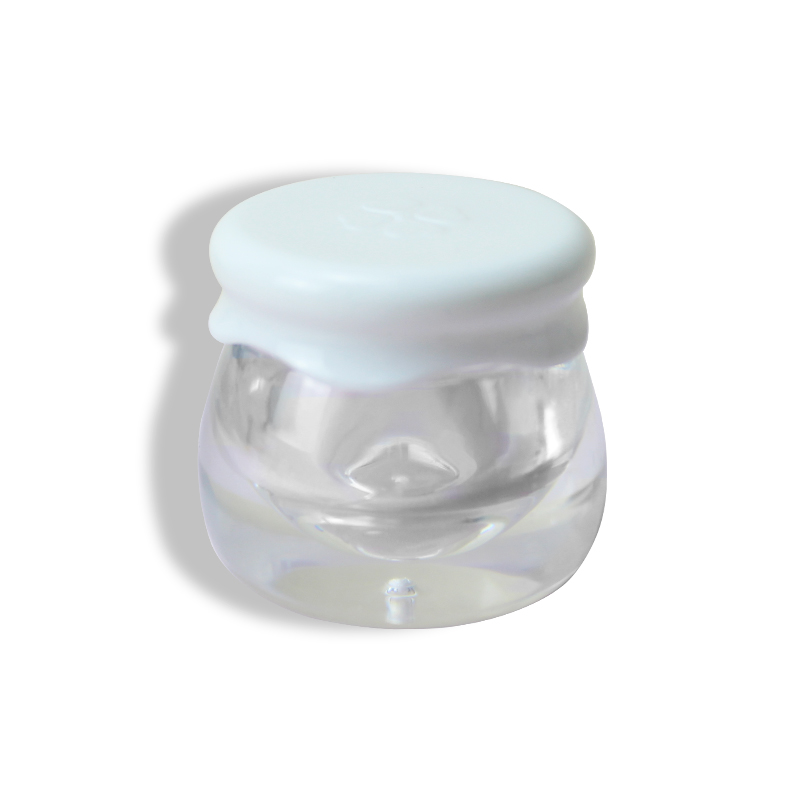
PP (Polypropylene) plastic containers are increasingly popular in the cosmetic and skincare industries, particularly for small-capacity products like creams, eye creams, and eyeliner gels.

plastic drink bottles factory, China cosmetic plastic bottles, disposable plastic bottle suppliers, plastic pet bottles manufactures, plastic bottles for lotion manufactures

customized color plastic bottle with pump 300ml 400ml 500ml round pet bottle for skincare plastic lotion bottle


HDPE Custom Eco PCR Recycled Plastic Bottle Body Tanning Oil 60ml Travel Size Squeeze Bottle Cosmetics


New female urine bottle. Equipped with a patented leak-proof cover to block urine leakage and avoid embarrassment. Currently, men's urine bottles are ...

These large empty pump bottles are ideal when you don’t want ugly or messy detergent bottles laying around. They are great for business use / work si...

Zhenghao Plastic & Mold Co.,Ltd had developed a new materia named HDPE sand blasting matieral, that is double layer bottle construction. The final bo...
Chemical storage demands precision—even the smallest oversight in container selection can lead to leaks, corrosion, or regulatory violations that compromise safety, product integrity, and operational efficiency. For labs, manufacturing facilities, and industrial operations, the reliability of a chemical storage bottle hinges on two non-negotiable factors: material compatibility and engineered wall thickness. These elements determine how a container withstands aggressive substances, extreme temperatures, and long-term use—making them the foundation of safe, compliant chemical management. In this guide, we'll dive deep into the science behind plastic chemical storage solutions, exploring why certain materials outperform others and how thickness is tailored to specific hazards, backed by industry standards and real-world expertise.
1. The Critical Role of Material Compatibility in Plastic Chemical Bottles
Selecting the right plastic for chemical storage isn't guesswork—it's a science rooted in polymer chemistry and chemical reactivity. Using an incompatible material can lead to container degradation, chemical leaching, or catastrophic failure. Plastic has become the preferred choice for 82% of chemical storage needs (American Chemistry Council) due to its durability, versatility, and cost-effectiveness. Below is a detailed breakdown of the most reliable plastic materials, their strengths, limitations, and ideal applications:
HDPE (High-Density Polyethylene): The Industrial Workhorse
HDPE is the gold standard for plastic chemical storage, trusted for its closed-cell structure that resists most acids, bases, and alcohols. It's the material of choice for chemical storage bottles holding detergents, fertilizers, mild solvents, and aqueous solutions.
•Impermeable to water vapor, preventing contamination and product degradation.
•Impact-resistant (10x stronger than glass in drop tests, per ASTM D2463).
•Cost-effective for high-volume industrial use and compliant with FDA/OSHA standards.
•Recyclable (code #2), aligning with sustainability goals.
Limitations: Avoid aromatic solvents (benzene, toluene), ketones (acetone), and strong oxidizers (concentrated nitric acid >40%).
LDPE (Low-Density Polyethylene): Flexibility for Specialized Dispensing
LDPE offers similar chemical resistance to HDPE but with greater flexibility, making it ideal for squeeze bottles or containers that need to conform to irregular storage spaces. It’s commonly used for plastic chemical bottles holding lab reagents, cleaning solutions, or dilute corrosives that require controlled dispensing. Its soft texture also reduces leakage risk with screw-on caps, a critical feature for frequent-use applications.
PP (Polypropylene): Heat & Solvent Resistance
PP excels in high-temperature environments (up to 130°C) and resists most organic solvents, making it suitable for bottles storing hot chemical solutions, oxidizing agents (e.g., hydrogen peroxide), and fatty acids. While less common for standard storage, PP is a top choice for specialized industrial applications where heat or solvent exposure is unavoidable. It’s also autoclavable, adding value for lab settings requiring sterilization.
PET (Polyethylene Terephthalate): Clarity with Caution
PET offers excellent clarity for transparent chemical bottles, allowing visual inspection of contents—ideal for non-reactive substances like dilute aqueous solutions, food-grade chemicals, or pharmaceuticals (when lined). However, its chemical resistance is limited: PET degrades rapidly with strong acids, bases, or organic solvents, making it unsuitable for industrial corrosives.
Fluoropolymers (PTFE, PFA): Ultra-Resistant for Extreme Chemicals
For highly aggressive chemicals (hydrofluoric acid, concentrated sulfuric acid), fluoropolymers are the only safe plastic option. These materials resist 99% of known chemicals but come at a premium cost. They're often used as liners for heavy-duty chemical bottles in semiconductor manufacturing, pharmaceutical research, and industrial settings where failure is not an option.
Glass: A Traditional Alternative (For Context)
Borosilicate glass, a staple in labs for its inertness, requires tempered construction (per ISO 15750) to reduce shatter risk. However, it's heavier (increasing shipping costs by 30%), more fragile, and less cost-effective than plastic for most industrial applications. Glass also lacks the impact resistance of HDPE, making it a secondary choice outside specialized lab use.
Material Compatibility Testing: Non-Negotiable
Never assume compatibility—ASTM Standard E2012 provides a framework for testing plastic-chemical interactions, documenting reaction risks like swelling, cracking, or leaching. A study by the University of California found that 67% of chemical spills in labs stem from incompatible container materials, underscoring the need for rigorous pre-use testing.
2. Wall Thickness Engineering: Beyond “Thicker = Better”
Wall thickness is a precise calculation, not a arbitrary choice. It's determined by four core factors: chemical corrosivity, storage pressure/temperature, container size, and regulatory requirements. For plastic bottles, thickness must balance durability, weight, and cost—over-engineering wastes resources, while under-engineering risks failure.
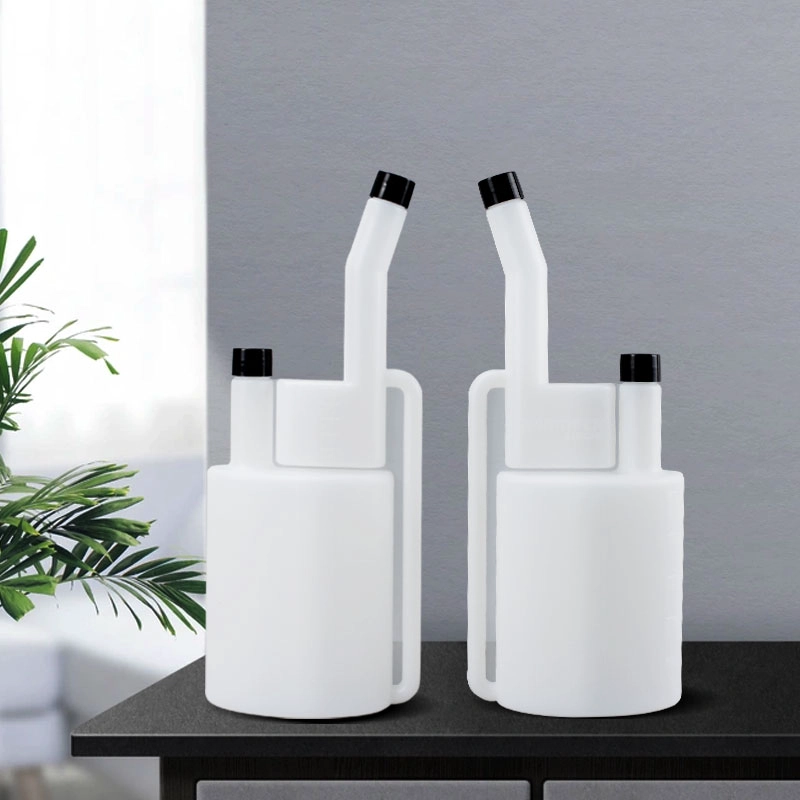
The Science of Thickness Calculation
Engineers use the Barlow Formula to determine minimum wall thickness for pressure-bearing plastic containers:
T= (P × D)/(2 × S × E - P)
•t = minimum wall thickness (inches)
•P = internal pressure (psi)
•D = outside diameter (inches)
•S = allowable stress (psi) for the plastic material
•E = joint efficiency (1.0 for seamless plastic bottles)
For non-pressurized storage, the formula adjusts to include a corrosion allowance (20-50% extra thickness) for aggressive chemicals. The U.S. Department of Transportation (DOT) mandates a minimum wall thickness of 0.0625 inches for HDPE chemical bottles under 5 gallons, with an additional 0.03125 inches for corrosives (49 CFR Part 173 Subpart E).
Thickness by Chemical Category: Data-Driven Recommendations
|
Chemical Category |
Minimum HDPE Thickness |
Rationale |
|
Mild acids/bases (pH 4-10) |
0.0625 in |
Low corrosion risk; meets DOT baseline |
|
Strong acids (pH |
0.09375 in |
50% corrosion allowance to prevent wall thinning |
|
Oxidizers (H₂O₂, KMnO₄) |
0.125 in |
Higher degradation risk; extra thickness for longevity |
|
Solvents (ethanol, methanol) |
0.0625 in |
HDPE-resistant; standard thickness sufficient |
|
Corrosive gases (HCl, NH₃) |
0.1875 in |
Pressurized storage requires reinforced walls |
Real-World Consequence of Inadequate Thickness
A leading chemical manufacturer learned this lesson in 2022: they used standard 0.0625-inch HDPE bottles for 68% nitric acid, resulting in 37 leaks over 6 months. The strong acid corroded the thin walls, causing product loss and $2.1M in cleanup costs. Switching to 0.125-inch HDPE bottles (per DOT guidelines for oxidizers) eliminated failures entirely—a testament to the importance of precise thickness engineering.
3. Regulatory Compliance: Plastic-Specific Standards
Chemical storage bottles must meet strict global regulations to ensure safety, and plastic materials have unique compliance requirements. Below are the most critical standards for plastic chemical containers:
OSHA Hazard Communication Standard (29 CFR 1910.1200)
Mandates that plastic bottles:
•Be made of compatible materials (verified via ASTM E2012 testing)
•Feature GHS-compliant labels with hazard symbols and safety data sheet (SDS) links
Maintain a leak-proof seal during normal use and transportation
DOT Specifications (49 CFR Part 173)
For plastic bottles used in transportation:
•Must meet DOT 2P (plastic) or 2Q (plastic with liners) classifications
•Pass impact tests (drop from 4 feet onto concrete) without cracking
Have a minimum pressure rating of 15 psi for liquid chemicals
ISO 15750: Laboratory Plastic Safety
Requires lab-grade plastic chemical bottles to:
•Withstand temperature ranges from -20°C to 60°C (standard for HDPE/LDPE)
•Resist cracking under 50 psi internal pressure
•Feature tamper-evident closures for hazardous substances
4. Advanced Design Features for Plastic Chemical Bottles
While material and thickness are foundational, these plastic-specific design features enhance safety, usability, and longevity:
Barrier Liners
For aggressive chemicals like hydrofluoric acid, a fluoropolymer (PTFE/PFA) liner adds an extra layer of protection to HDPE/PP bottles. The Chemical Packaging Institute found that lined plastic bottles extend service life by 300% compared to unlined alternatives, preventing chemical permeation and material degradation.
Venting Systems
Volatile chemicals (e.g., ammonia, formaldehyde) generate pressure buildup, so plastic bottles often include automatic vents that activate at 10 psi. Manual vents are also available for controlled pressure release during dispensing, reducing spill risk.
Color-Coding for Hazard Identification
Industry best practice uses color-coded plastic bottles to quickly classify chemical hazards, reducing handling errors by 47% (National Institute for Occupational Safety and Health, NIOSH):
•Red chemical bottles: Corrosives
•Yellow chemical bottles: Oxidizers
•Blue chemical bottles: Toxins
•Green chemical bottles : Flammables
5. Case Study: Custom Plastic Bottles for Pharmaceutical API Storage
A mid-sized pharmaceutical manufacturer faced recurring issues with plastic chemical bottles failing during long-term storage of active pharmaceutical ingredients (APIs). Their generic HDPE bottles were degrading after 3 months, causing API contamination and batch losses.
Problem Analysis
The APIs contained 20% ethanol and 5% acetic acid—chemically compatible with HDPE—but failures persisted due to:
•Standard 0.0625-inch wall thickness being insufficient for 12+ month storage
•Warehouse temperature fluctuations (15°C to 35°C) accelerating material breakdown
•Lack of UV stabilizers, leading to API photodegradation
Custom Plastic Solution
We engineered heavy-duty chemical storage bottles with three plastic-specific upgrades:
•Thickness: Increased to 0.125 inches (50% corrosion allowance for long-term use)
•Material: Blended HDPE with 10% UV stabilizers to block light-induced degradation
•Liner: Added a PTFE liner to prevent ethanol permeation and preserve API purity
Results
Over 18 months, the custom plastic bottles delivered:
•Zero contamination incidents or leaks
•62% reduction in packaging costs (fewer replacements vs. generic bottles)
•Compliance with FDA's Current Good Manufacturing Practices (cGMP)
This case highlights how plastic chemical bottles can be tailored to specific use cases—proving that even “compatible” materials benefit from engineered thickness and design.
6. Step-by-Step Guide to Selecting Plastic Chemical Storage Bottles
•Test chemical compatibility: Use ASTM E2012 guidelines to match your substance with HDPE, LDPE, PP, or fluoropolymer-lined plastic.
•Calculate required thickness: Apply the Barlow Formula, adding 20-50% corrosion allowance for aggressive chemicals.
•Verify regulatory compliance: Ensure the bottle meets DOT, OSHA, and ISO standards for your application.
•Add safety features: Opt for liners, vents, or color-coding based on hazard level.
•Conduct real-world testing: Perform 30-day stress tests (temperature cycling, drop tests) to validate performance.
This case highlights how plastic chemical bottles can be tailored to specific use cases—proving that even“compatible”materials benefit from engineered thickness and design.
Final Thoughts: Safe Chemical Storage Starts with Plastic Engineering
Plastic chemical storage bottles are more than containers—they're engineered safety systems. By prioritizing material compatibility and precise thickness calculations, businesses can prevent costly accidents, ensure regulatory compliance, and protect personnel and products. Plastic's versatility, durability, and cost-effectiveness make it the preferred choice for most chemical storage needs, and custom-engineered solutions further enhance its performance for specialized applications.
Whether you need small chemical bottles for lab use or large industrial containers, partnering with a manufacturer that specializes in plastic chemical packaging ensures your bottles are designed to meet your unique hazards and standards. With the right plastic solution, chemical storage becomes a reliable foundation for safe, efficient operations.

 français
  Deutsche
  русский
  Español
  Italian
  português
  Nederlands
  Ελληνικά
  简体中文
简体中文  Polskie
  Czech
Czech